Aside from their benefits to our mobility and flexibility, one of the most effective ways to calm your body and mind is to engage in regular stretching! At our practice, we’ve seen firsthand how small daily routines can make a big difference for patients.
You can reduce stress using stretches by combining gentle movements with deep breathing to release tension, improve blood flow, and calm your nervous system. Simple stretching can quickly lower stress levels and support better mental health when done consistently.
In this article we’ll present some of the best stretches for stress relief, how they work, and how to build a simple routine you can easily stick with.
Why stretching works so well to relieve stress
If you’ve ever felt your shoulders creep up toward your ears during a stressful day, you’ve already experienced how stress lives in the body.
Stretching exercises relieve stress by addressing both the physical and neurological sides of tension. When you perform gentle stretches, you help release tension stored in muscles while also signaling your brain to relax.
Over the years, our physical therapists have noticed that patients who incorporate even short stretching routines tend to report better stress relief and improved overall well-being.
When we stretch, we experience
- Increased blood flow to tight muscles
- A temporarily improved range of motion
- Reduced muscle stiffness in the neck and shoulders
- Activation of the parasympathetic nervous system (your “rest and relax” mode)
When paired with deep breathing, stretching becomes even more powerful for managing stress.
Even 5–10 minutes a day can create noticeable improvements.
What body parts to focus on for maximum effect
If your goal is stress relief, focusing on specific areas of the body can make your stretching routine significantly more effective. The caveat here is that everyone’s different: if you know that you get a lot of relief from stretching a certain body part not listed here, then have at it!
In our experience, stress tends to accumulate in predictable places. Targeting these areas helps you release tension faster and feel results sooner.
Here are the key body parts to prioritize:
- Neck and shoulders: One of the most common areas for stress buildup. Tightness here is often linked to desk work and mental stress.
- Upper back: Helps counteract poor posture and reduces that “hunched” feeling many people get during stressful days.
- Chest: Opening the chest can improve breathing and reduce tension caused by slouching.
- Hips: Emotional stress can lead to tight hips, especially if you spend long periods sitting.
- Lower back: Supports overall mobility and helps relieve stiffness tied to stress and inactivity.
We often tell our patients that if you only have a few minutes, start with the neck and shoulders—this is where you’ll usually feel the quickest relief.

Best stretches for stress relief you can do anywhere
You don’t need a gym or special equipment—just a little space and a few minutes.
Here are some of the most effective stretches to reduce stress that we recommend to our patients.
Child’s pose for full-body relaxation
Child’s pose is one of the most effective gentle stretches for calming the nervous system.
- Start flat on the floor on your hands and knees
- Sit your hips back toward your heels
- Extend your arms forward and rest your forehead down
- Focus on slow, deep breathing
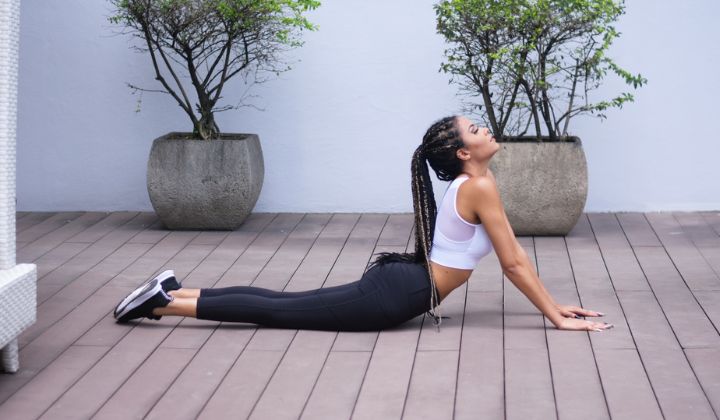
This stretch helps release tension in the back, shoulders, and hips while promoting relaxation.
Neck and shoulder release stretch
Stress often builds in the neck and shoulders, making this a must-do.
- Sit or stand with your feet shoulder-width apart
- Gently tilt your head to one side
- Use your hand for light pressure (no pulling)
- Hold for 20–30 seconds, then switch sides
We frequently recommend this to patients who spend long hours at a desk.
Standing forward fold
This stretch is great for relieving tension throughout the entire body.
- Stand with your feet hip-width apart
- Slowly fold forward, letting your arms hang
- Keep a slight bend in your knees if needed
It helps increase blood flow and reduce stress quickly.
Chest opener stretch
Poor posture from stress can tighten the chest and shoulders.
- Stand with your feet planted firmly
- Clasp your hands behind your back
- Gently lift your arms and open your chest
This simple stretch can counteract hours of slouching.
How to build a simple stretching routine for stress relief
The key to success is keeping your routine simple and realistic.
We often tell our patients: if it’s too complicated, you won’t do it.
Based on the routines in our optimal stretching for flexibility guide, here is a simple routine anyone should be able to follow:
- Start with 2–3 gentle stretches
- Hold each for 20–30 seconds
- Focus on deep breathing throughout
- Repeat daily, ideally at the same time each day
Morning routines can help set the tone for your day, while evening routines can promote relaxation before sleep.
Common mistakes to avoid when stretching for stress
Even simple stretch routines can be less effective if done incorrectly.
Here are a few common mistakes we see:
- Rushing through stretches without breathing
- Pushing too hard (discomfort or further stress!)
- Ignoring pain that really should be treated by a professional
Stretching should feel relieving, not painful.
Our experience has shown that slower, more mindful movement leads to better stress-relieving outcomes than aggressive stretching.
When to consider physical therapy for stress-related tension
If your stress is causing persistent pain or limiting your movement, it may be time to seek help.
Physical therapy can address underlying issues contributing to tension, such as poor posture, muscle imbalances, or restricted range of motion.
At Petersen Physical Therapy, we work with patients to create personalized plans that go beyond basic stretches—helping them relieve stress and move more comfortably.
If you’re wondering whether professional care could help, see the guidelines laid out in our article on when to get a physical therapist involved.
Final thoughts on using stretches to relieve stress
Stretches to relieve stress are a simple but powerful tool for improving both physical and mental health.
By incorporating stretching exercises to relieve stress into your daily routine, you can release tension, improve mobility, and support long-term stress relief.
The key is consistency, proper technique, and listening to your body.
And if you ever feel stuck, working with experienced physical therapists can help you build a plan that actually works for your lifestyle.