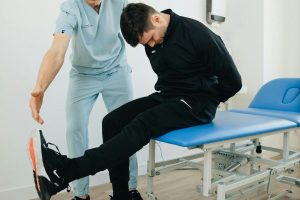
At Petersen Physical Therapy, with years of hands-on experience helping patients reduce fall risk in our patients, and we’re frequently going over fall risk classifications with patients to uncover the risks in their lives.
Fall risk factors are typically classified into two main categories: intrinsic risk factors for falls (related to a person’s body or health) and extrinsic risk factors for falls (related to the environment). Identifying both types in a patient’s life is important for fall risk assessments and fall prevention.
Keep reading as we break down intrinsic vs extrinsic factors, discuss real-world examples, and show you how to identify and reduce your risk of falling today.
Intrinsic risk factors for falls
Intrinsic risk factors for falls are internal factors. These are things that happen within your body that increase your risk of falling. They are often tied to health conditions, physical limitations, or changes that come with aging.
We like to lead with intrinsic factors, because they are the most often overlooked. They are less visible than environmental factors (which we’ll discuss later), but here’s the downside: our intrinsic fall risk factors follow us everywhere!
Some of the most common intrinsic factors include:
- Muscle weakness (leading to reduced strength and balance)
- Poor coordination or gait instability
- Cognitive impairment or slowed reaction time
- Vision problems
- Chronic conditions affecting mobility
- Medication side effects that impact blood pressure or alertness
For example, a sudden drop in blood pressure when standing (orthostatic hypotension) can make someone dizzy and significantly increase their risk of falling. This is something we frequently screen for during a fall risk assessment.
Intrinsic factors can also be progressive. That means without intervention, the risk for falls often increases over time.
If you’re unsure where you stand, our guide on fall risk factors in older adults can help you better understand your baseline risk.

Extrinsic risk factors for falls in everyday environments
Extrinsic risk factors for falls are external hazards—things in your environment that can cause a fall occurs even if your body is functioning well.
In our clinics, patients are often surprised by how many of these risks exist in their own homes.
Common extrinsic risk factors include:
- Poor lighting in hallways or staircases
- Loose rugs or clutter on the floor
- Uneven surfaces or slippery floors
- Lack of handrails or grab bars
- Improper use of assistive devices
According to the Centers for Disease Control and Prevention (CDC), many falls happen due to simple environmental issues that can be corrected relatively easily.
One of the most common things we tell our patients is this: you can be physically strong, but if your environment is unsafe, your fall risk remains high.
For a deeper dive into environmental hazards, check out our article on top fall risk factors inside the home.
Why understanding fall risk factors matters
Understanding how fall risk factors classified isn’t just academic. It provides us with a framework for designing fall prevention plans for our patients.
When we evaluate patients in a health care setting, we don’t just look at one category. We assess both intrinsic and extrinsic factors together.
Here’s why that matters:
- Addressing only intrinsic factors (like strength) ignores environmental dangers (as physical therapists, we need to be careful of this one!)
- Fixing only extrinsic factors (like lighting) doesn’t improve physical limitations, and it’s not always helpful! (nobody is in a perfect environment 100% of the time)
We often tell our patients that reducing the risk of falling is like solving a puzzle—you need all the pieces.
A comprehensive fall risk assessment allows physical therapists to identify high-risk individuals and create personalized plans to reduce falls.

How physical therapists assess fall risk
A proper fall risk assessment goes beyond a quick checklist. In our physical therapy practice, we use a combination of movement analysis, balance testing, and patient history to identify risk factors.
Some key components include:
- Evaluating gait and walking patterns
- Testing strength and balance
- Reviewing medical history and medications
- Assessing cognitive function
- Identifying environmental risks at home
Our patients often ask, “Am I high risk?”—and the answer isn’t always straightforward. That’s why individualized assessments are so important.
We also educate patients on how to monitor their own risk over time, especially if they’ve experienced a fall before.
For a deeper dive on how professionals evaluate fall risk, see our breakdown on how to determine fall risk.
Practical strategies for fall prevention
Once you understand intrinsic and extrinsic factors, the next step is taking action to prevent falls.
Here are some proven strategies we recommend to our patients:
Improve strength and balance
Targeted exercises can significantly reduce falls by improving stability and coordination. Even simple routines can make a big difference over time.
For example, these exercises are a great place to start: top five exercises to reduce fall risk.
Optimize your environment
Reducing extrinsic risk factors is often the quickest win.
- Add better lighting in key areas
- Remove tripping hazards
- Install grab bars where needed
Use assistive devices correctly
Walkers, canes, and other assistive devices can reduce risk (but only if they’re properly fitted and used).
We’ve seen many cases where improper use actually increases fall risk.
Address underlying health issues
Managing chronic conditions, monitoring blood pressure, and addressing cognitive impairment can all reduce your risk for falls.
Stay proactive with physical therapy
Physical therapists play a key role in reducing the risk of falling. Through guided programs, patients can build strength, improve mobility, and regain confidence.
Over the years, our team has helped countless individuals move from high risk to significantly safer levels of mobility.
Final thoughts on fall risk classification
Understanding how are fall risk factors classified gives you a clear framework for preventing falls before they happen.
By addressing both intrinsic factors and extrinsic risk factors for falls, you can take meaningful steps toward improving your safety and overall quality of life.
If you’re concerned about your fall risk, working with experienced physical therapists can make all the difference. A personalized approach ensures that no risk factor—internal or external—is overlooked.