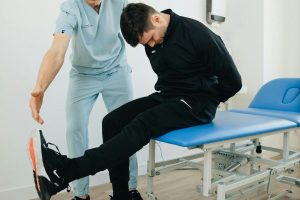
One of the common services we offer in our clinic is physical therapy for worker’s compensation. As such, we are often dealing with questions around whether or not a particular worker needs physical therapy after their work injury.
Though the details of your case may be variable, we generally point patients to our general criteria for getting a physical therapist involved regardless of their worker’s compensation status:
You’ll know you may need physical therapy after a workplace injury if pain, stiffness, weakness, or loss of range of motion is interfering with your ability to work or perform daily tasks. Whether you require physical therapy depends on the injury, how your body is healing, and the physical demands of your job.
In this article, we’ll discuss how we assess whether a patient truly needs physical therapy after a work injury, and how to tell whether rehab is a logical next step for you.
Physical therapy after a work injury: when is it needed?
Not every workplace injury looks severe at first, but even minor injuries can lead to long-term issues if they’re ignored. Over the years, our experience has shown that early physical therapy often helps reduce pain and prevents small problems from becoming chronic.
You may require physical therapy after a work injury if you notice:
Ongoing pain that isn’t resolved after two weeks
One of the rules of thumb we give our patients frequently is that if your symptoms have persisted for more than two weeks, you should consider getting a professional involved.
The reason for this is that most minor injuries will resolve on their own (or significantly improve) within about two weeks with basic care such as using over the counter anti-inflammatory medications, applying ice/heat when necessary, and resting the affected area.
Symptoms affecting your ability to do your job
The symptoms we look for are:
- Stiffness or reduced range of motion (when compared to pre-injury levels)
- Weakness or instability affecting job tasks
- Repetitive strain conditions like carpal tunnel syndrome
- Difficulty returning to work without re-aggravating any of the above symptoms
Injured workers often try to “push through” these symptoms, but that approach can delay healing and increase the risk of reinjury.

Common workplace injuries that benefit from physical therapy
Physical therapy is commonly used to treat a wide range of work-related injuries. These include acute injuries from slips, falls, or lifting incidents, as well as overuse injuries that develop gradually.
Some of the most common injuries physical therapy helps address include:
- Back and neck injuries
- Shoulder, elbow, and wrist pain
- Knee, hip, and ankle injuries
- Tendonitis and repetitive strain injuries
- Nerve-related issues affecting strength or sensation
Our patients often ask whether physical therapy is necessary if imaging doesn’t show a major injury. In many cases, pain and movement limitations come from soft tissue irritation, weakness, or poor movement patterns—issues physical therapy is designed to treat.
How physical therapy helps injured workers return to work
One of the primary goals of physical therapy after a workplace injury is helping you return to work safely and confidently. Treatment isn’t just about reducing pain—it’s about restoring function.
A physical therapist creates a treatment plan focused on:
- Reducing pain and inflammation
- Restoring normal range of motion
- Restoring (or building) strength and stability around affected joints
- Rebuilding muscular endurance
- Improving movement quality and motor control
- Preparing your body for job-specific demands
Note that an “injury” in our case may not be a result of a singular event like a fall or accident. Many of us have jobs that involve prolonged standing, lifting, repetitive tasks, etc, which can lead to symptoms.
Targeted exercises are selected based on your injury and the physical requirements of your job, with the goal of improving your ability to perform these tasks pain free.
Does every workplace injury require physical therapy?
Not every injury requires formal physical therapy, and this is where professional guidance makes a difference. In some cases, symptoms resolve quickly with rest and activity modification.
However, physical therapy is often recommended when:
- Symptoms persist beyond about two weeks (the length of time most minor injuries take to improve on their own)
- Pain actually worsens with work activities
- You’re compensating or moving differently to avoid discomfort
- You’re unsure how to safely resume normal activity
In our experience, delaying care can turn a short-term issue into a long-term limitation.

Physical therapy and workers compensation claims
Many injured workers wonder how physical therapy fits into a workers’ compensation claim. Physical therapy is commonly covered under workers’ comp when it’s deemed medically necessary. See our full article on how long workers’ compensation generally pays for physical therapy for more specific guidance on how the process works.
A physical therapist can document progress, functional limitations, and readiness for returning to work, which prove invaluable during a workers’ compensation claim. In some cases, injured workers also consult a workers’ compensation attorney to help navigate the process.
Long-term benefits of physical therapy after a work injury
The benefits of physical therapy extend beyond short-term pain relief. Addressing movement limitations early can reduce the risk of chronic pain and repeat injuries.
Long-term benefits may include:
- Improved strength and mobility
- Better movement efficiency
- Reduced risk of reinjury
- Greater confidence performing work tasks
- Improved overall quality of life
Our experience treating work related injuries has shown that patients who complete physical therapy often return to work stronger and more resilient than before.
How to know if you should schedule a consultation
If you’re unsure whether you require physical therapy, a consultation can provide clarity. A physical therapist evaluates your injury, movement patterns, and work demands to determine whether therapy would be beneficial.
If pain, limited movement, or weakness is affecting your ability to work—or if you’re concerned about long-term consequences—it may be time to schedule a consultation and get professional guidance.
Suggested internal links
- How long will workers comp pay for physical therapy
- Benefits of physical therapy
- When to see a physical therapist
- Signs you need physical therapy after a car accident