Age-related muscle loss doesn’t happen overnight, and it is a serious issue facing all of us. If left unchecked, it can lead us into falls and accidents that affect our quality of life, sometimes permanently. The good news is that resistance exercise for sarcopenia is highly effective, and can extend our quality of life dramatically as we age.
The most effective way to combat sarcopenia is through regular resistance training combined with proper nutrition, especially adequate protein intake. Strength training stimulates muscles to grow stronger and improves balance and mobility, making it one of the most effective strategies for managing sarcopenia.
In this guide, you’ll learn what causes sarcopenia, why we recommend basic strength training to our patients, and the guidelines for exercises to help build and maintain muscle as you age. We’ll also cover how often you should train, dietary considerations, and discuss how these recommendations change by decade.
Let’s quickly define “sarcopenia”
Some age-related muscle atrophy is normal, starting (for most of us) in our 30s, and accelerating in our 60s. However, when the 3-8% reduction in muscle mass per decade is accompanied by measurable loss of muscle strength or physical function, we’ve met the threshold for the medical condition known as “sarcopenia.”
Sarcopenia refers to a level of decline that begins to affect your mobility, balance, and ability to perform everyday activities.
Most adults begin losing muscle mass as early as their 30s, but the process typically accelerates after age 60. Without regular strength training, proper nutrition, and an active lifestyle, this gradual decline can eventually make routine tasks more challenging and increase the risk of falls and injury.
Why age-related muscle loss matters
The reason we’re concerned about this generally is that losing muscle mass affects nearly every aspect of our health and independence.
Muscle plays a critical role in:
- Maintaining balance
- Supporting your joints
- Protecting your bones
- Regulating blood sugar
- Making everyday movement easier
As muscle mass declines, simple activities like standing up from a chair, climbing stairs, or carrying groceries can become increasingly difficult.
Sarcopenia also increases the risk of falls, fractures, and hospitalization. Research has consistently shown that people with greater muscle strength tend to live longer, remain more independent, and enjoy a higher quality of life than those who are sedentary.
The earlier you begin preserving your muscle mass, the easier it is to maintain your strength and function as you age.
Sarcopenia exercise programming
Fortunately, sarcopenia is one of the few age-related conditions that responds remarkably well to lifestyle changes. Though we can’t fully prevent sarcopenia, we can slow it’s progress to the point that we dramatically increase our healthspan (the number of years we spend healthy as opposed to simply alive).
Even if you’ve never exercised before, your muscles can adapt and become stronger at virtually any age.
The foundation of an effective solution we propose is as follows:
1. Perform resistance training at least two days per week
As we discussed in our article on how much exercise we need, resistance training twice per week is plenty for most of us.
Note that by “resistance training”, we could be referring to any number of different exercise modalities, not limited to lifting weights alone. This could mean:
- Traditional gym lifting: barbells, dumbbells, machines, etc.
- Non-traditional lifting implements like kettlebells (space-saving and convenient)
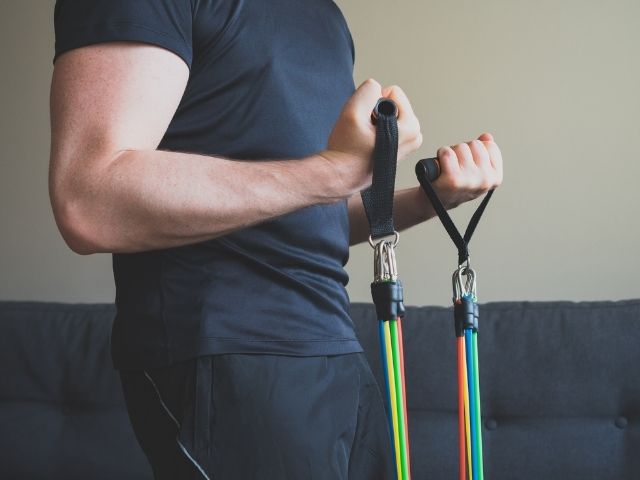
- Resistance bands (very convenient for those of us who travel a lot!)
- Calisthenics (bodyweight training like push-ups, squats, lunges, pull-ups, etc)
- Suspension trainers like the TRX, etc.
None of the above are the wrong choice, as they will yield remarkably similar results as long as we follow the basic principles of effective resistance training.
The guidelines for our resistance training days should be as follows:
2. Focus on compound movements that work multiple muscle groups
We recommend what are called “compound” movements for two reasons:
- They are generally efficient, in that they take the place of multiple single-joint or “isolation” excercises
- They tend to mimic functional movement patterns found in every day life.
We recommend picking one movement for each of the major movements in each session:
- A double-leg or single-leg squat or lunge variation
- A “hip hinge” variation (some type of deadlift, Roman chair/hyperextension, or kettlebell “swing”)
- A compound “press” (push-up, bench press, overhead press, pike push-up, etc)
- A compound “pull” (pull-ups, rows with dumbbells/barbells/machines, etc)
For resistance training twice per week, we recommend picking ONE exercise from each category and performing between 3-4 sets per exercise, per session.
3. Gradually increase the amount of resistance as exercises become easier
You don’t need to spend hours in the gym. Two or three well-designed sessions each week are enough for most people to see significantly improved muscle strength, balance, and physical function.
Alternatively, these sessions can easily be broken up into multiple micro-workouts throughout the day, if that fits your schedule better.

Dietary considerations
Much can be said about dietary considerations for various goals, but for the purposes of this article, we’ll focus just on the ones that affect our resistance training practice the most:
Hit a daily protein intake goal
If we think of resistance training sessions as the “stimulus” for muscle growth/repair, then protein provides the “building blocks” for said growth/repair.
In other words, progress won’t be realized unless we have BOTH the stimulus AND the building blocks present.
Though there are numerous variations of protein intake recommendations that exist, many of them center around similar numbers. To keep things simple:
- Eat around .8g of protein per pound of bodyweight, per day.
- Prioritize animal sources and whole foods
- If necessary, supplement with a whey protein supplement
So, a 200lb man would require: 200 x .8 = 160 grams of protein, per day, and a 160lb woman would require 160 x .8 = 128 grams of protein, per day.
Notes about total calories
Most recommendations for building muscle suggest either eating at maintenance calories (enough to maintain your current body weight) or in a slight calorie surplus of about 100-300 calories per day.
That said, we’d like to add a third option. If you’re new to resistance training and your goal is weight loss, you can likely eat in a modest calorie deficit (around 200-300 calories per day) while still building muscle, provided you’re training consistently and hitting your protein goal.
As you become a more experienced lifter, simultaneously losing fat and building muscle becomes more difficult, and your calorie intake may need to be adjusted based on your goals.
Modifications by decade
While the basic principles of resistance training don’t change much with age, the emphasis often does.
40s: This is the best time to establish a consistent strength training routine if you haven’t already. Focus on building good movement patterns, progressively increasing resistance, and creating habits that you’ll maintain for decades.
50s: Recovery may begin taking a little longer, so don’t be surprised if you need an extra rest day between workouts. Continue challenging yourself, but pay closer attention to sleep, nutrition, and recovery.
60s: Strength remains the priority, but balance and mobility become increasingly important. We often recommend incorporating exercises that improve single-leg stability, coordination, and confidence with everyday movements.
70s and beyond: Resistance training continues to be one of the best things you can do for your health. The goal shifts away from chasing personal records and toward maintaining independence, decreasing fall risk, and preserving the ability to perform everyday activities. Progress may come more slowly, but it absolutely still comes.

Sarcopenia in men vs women
Both men and women experience sarcopenia, but there are some important differences.
Men generally begin with more muscle mass and strength, so they often notice muscle loss later in life. Women, on the other hand, commonly experience a more rapid decline after menopause due to hormonal changes, making strength training especially important during this time.
Fortunately, the treatment is essentially the same regardless of sex. Consistent resistance training, adequate protein intake, and staying physically active remain the most effective strategies for preserving muscle and maintaining independence.
Can you be “too old” to take action?
Absolutely not.
One of the most encouraging things about muscle is that it continues to respond to resistance training throughout life. Research has shown that adults in their 70s, 80s, and even 90s can improve muscle mass, strength, balance, and physical function with a well-designed exercise program.
Will you build muscle as quickly as someone in their 20s? Probably not. But becoming stronger than you are today is always a worthwhile goal.
Whether you’re trying to make it easier to get out of a chair, keep up with your grandchildren, or simply remain independent for as long as possible, it’s never too late to start. The best time to begin was years ago. The second-best time is today.