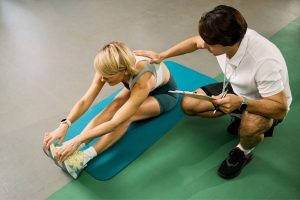
In the past, we’ve spent time discussing whether strength training reduces flexibility (hint: it generally does not). In this article, we’ll discuss how flexibility affects strength overall, and the relationship between these two attributes.
Flexibility can support strength by allowing muscles to move through a fuller, more efficient range during exercise. Better flexibility may reduce movement restrictions and help optimize force production, but excessive flexibility without adequate stability can decrease strength and increase injury risk.
In this article, we’ll discuss the affect that increasing flexibility will have on strength and stability, and provide you with some guidance about determining what flexibility increases, if any, will be necessary for your specific situation.
Viewing flexibility and strength as sliding scales
People often think of strength and flexibility as opposing qualities. The assumption is that increasing one will decrease the other. In reality, the relationship between the two is much more nuanced:
Neither flexibility nor stiffness is inherently good or bad.
Both exist on a spectrum, and both serve important purposes. Some degree of flexibility is necessary to move comfortably and efficiently, while some degree of stiffness is necessary to create stability and transfer force.
As with many things in the human body, more is not always better. There is an optimal amount of flexibility for a given person, activity, or sport.
To illustrate, consider this:
The amount of mobility required for a gymnast is very different from the amount needed by a lifter, golfer, or someone who simply wants to stay active and healthy.
Instead of thinking of flexibility and strength as competing attributes, it is more helpful to think of them as complementary qualities that must exist in balance.
How flexibility affects strength
Muscles produce force most effectively when they operate within an optimal range of length. This means that the length of the muscle (determined by its flexibility) affects it’s ability in both directions:
- Excessive tightness can restrict joint motion and place muscles in positions where they cannot generate force as efficiently.
- Likewise, excessive looseness may reduce the tension necessary for optimal force production.
Limited flexibility may also prevent certain muscle groups from moving through a full range of motion. For example, restricted ankle mobility may limit squat depth, while shoulder stiffness can interfere with overhead movements.
In these situations, improving flexibility may enhance movement quality and allow for better muscle strength development.
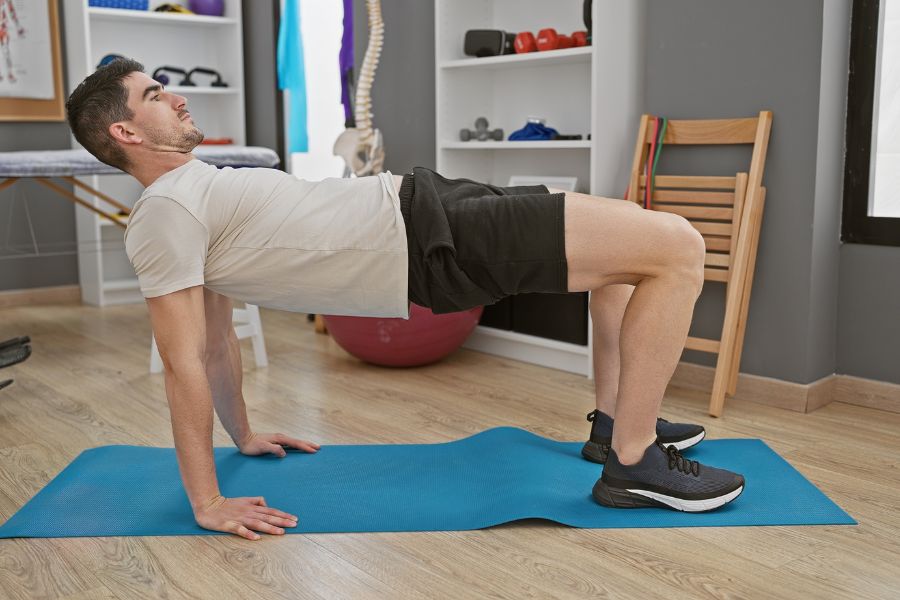
This is one reason why many well-designed training programs incorporate both stretching and strength training together. Resistance training itself often helps improve flexibility when exercises are performed through a full range of motion, and combining stretching and strengthening exercises can address specific mobility or flexibility restrictions when they are present.
Improving flexibility can sometimes improve strength by allowing better positioning and more efficient movement patterns. However, flexibility alone does not create strength. Increased range of motion must be accompanied by muscular control and stability if those new positions are going to be useful.
Can you be “too flexible?”
Many people assume that flexibility is always beneficial, but it is possible to have too much flexibility.
Individuals with generalized joint hypermobility or excessive ligament laxity often have joints that move beyond what is necessary for normal function. This can occur in conditions such as Ehlers-Danlos syndrome, which we frequently see in our clinic. While this increased mobility may seem advantageous, it often comes at the expense of stability.
When joints lack sufficient support, muscles must work harder to provide that stability. This can lead to fatigue, discomfort, and an increased risk of injury. In some cases, excessive mobility may reduce muscle strength because force is not transferred efficiently through unstable joints.
This is why mobility and stability should always be considered together. Being able to move into a position is only helpful if you can also control that position. Stability is also important for improving balance and coordinating movement between multiple muscle groups.
At what point should we be concerned?
There is no single flexibility measurement that determines whether someone has too much or too little mobility. Instead, it is more important to consider how that flexibility affects function.
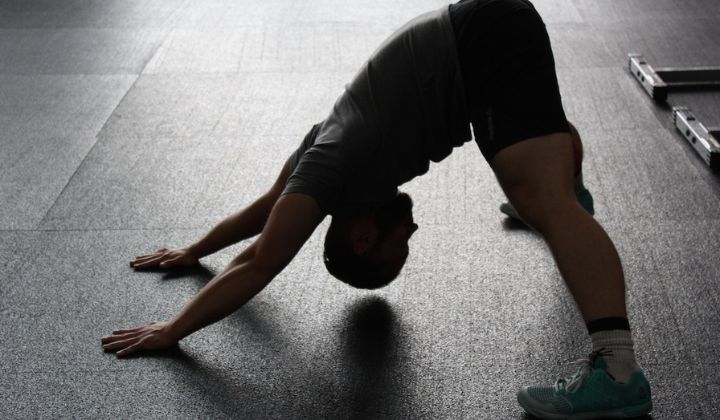
Limited flexibility may become problematic when it interferes with normal activities, exercise performance, or causes pain. On the other hand, excessive flexibility may warrant attention if it contributes to feelings of instability, recurrent injuries, joint pain, or difficulty maintaining control during movement.
Ultimately, flexibility should serve a purpose. If your current mobility allows you to perform the activities you enjoy without pain or limitations, there may be little reason to pursue additional range of motion.
Do you need to improve flexibility?
Not everyone needs to improve flexibility. In most cases, the question is whether your current mobility limits something you want or need to do.
Here are some guidelines we use. If your level of stiffness is:
- Interfering with daily activities,
- Causing discomfort during exercise, or
- Preventing you from performing movements through a full range of motion,
…then, increasing flexibility may be beneficial.
Different activities also require different amounts of mobility, so flexibility goals should reflect your lifestyle and interests.
On the other hand, if you can comfortably perform your normal activities and resistance training without limitations, there may be little benefit to pursuing additional flexibility simply for the sake of becoming more flexible.
Ultimately, the goal is not to maximize flexibility. It is simply to have enough mobility to meet the demands of your daily life and preferred activities.
Finding the right balance between flexibility and strength/stability
Though improving flexibility can be helpful for various goals, we hope the message here has come across: the goal should not be to become as flexible as possible, just for the sake of improving flexibility.
Instead, the goal is to develop the amount of mobility necessary to perform your desired activities while maintaining enough strength and stability to control those movements effectively.
For some people, this may mean working to improve flexibility. For others, it may mean focusing more on resistance training and strengthening the surrounding muscle groups.
Ultimately, strength and flexibility are not opposing forces. They work together. A balanced training program that combines stretching and strength training can help improve movement efficiency, maintain muscle strength, and reduce the risk of injury.
In most cases, the ideal amount of flexibility is simply enough flexibility to meet the demands of your life.