
If your back hurts when you wake up, your sleep posture may be the culprit. Many of the patients we see with low back pain tell us their nights are some of the hardest part. The good news is that a few small changes to your sleeping posture for lower back pain can make a real difference in how you feel in the morning.
The best sleeping posture for lower back pain is usually one that keeps your spine in a neutral, supported position: on your back with a pillow under your knees, or on your side with your knees slightly bent and a pillow between them. Stomach sleeping tends to strain the low back and is generally best avoided.
In this article, we’ll explain why sleep position matters, walk through each position, and share a few tips on pillows, mattresses, and getting in and out of bed.
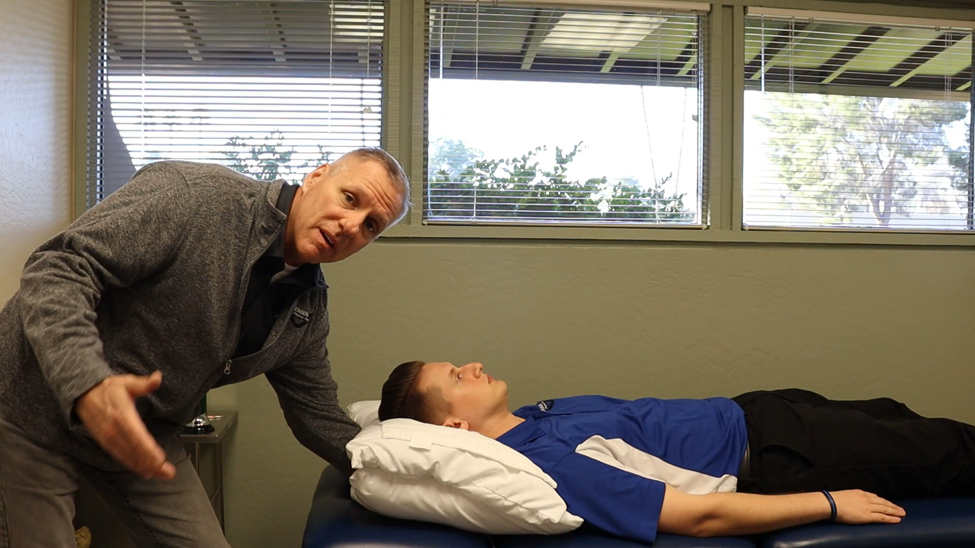
The best sleeping posture for lower back pain
On your back, with a pillow under your knees
For many people, this is the most back-friendly position. Placing a pillow under your knees gently bends your hips and knees and lets your low back relax into the mattress. A small rolled towel under the small of your back can add lumbar support if that feels better. This helps your spine keep its natural curves.
On your side, with a pillow between your knees
Side sleeping is the most common position, and it can work well, as long as you keep your spine lined up. Bend your knees slightly toward your chest and put a pillow or a body pillow between your knees. That keeps your top leg from pulling your pelvis and low back into a twist. Your head pillow should fill the space between your shoulder and ear so your neck stays level too. As a side sleeper, you will likely find this position easy to hold.
The fetal position, in moderation
Some people with certain types of back pain feel better curled up on their side with knees drawn toward the chest. If that position eases your symptoms, it’s fine to use. Just avoid curling so tightly that you end up stiff in the morning.
Stomach sleeping (and how to make it better)
Lying on your stomach tends to arch the low back and turn your neck to one side for hours. If you can’t sleep any other way, put a thin pillow under your hips and lower belly to reduce the arch, and use a very flat pillow or none under your head. A thin pillow here can also reduce pressure on the low back.
Why sleep position affects your back
When you sleep, your muscles relax and your body is supported mostly by your mattress and pillows. If your spine sags, twists, or arches for hours, the joints, discs, and soft tissues of your low back can be stressed in positions they don’t love. Over a full night, that adds up.
In our clinic, we see the same pattern. Patients who sleep on their back or on a well-supported side usually wake up feeling better, while stomach sleeping or a poorly aligned side position tends to leave the low back sore. A supportive pillow and mattress go a long way. Most of our patients find that sleeping on your side feels better with the right pillow.
It’s also worth remembering that sleep and pain influence each other. Poor sleep can make pain feel worse, and pain makes it harder to sleep. Improving one often helps the other. Daytime habits matter too. Long hours in a chair can leave your back stiff before you even lie down, which is one reason we asked the question about whether sitting is the new smoking.
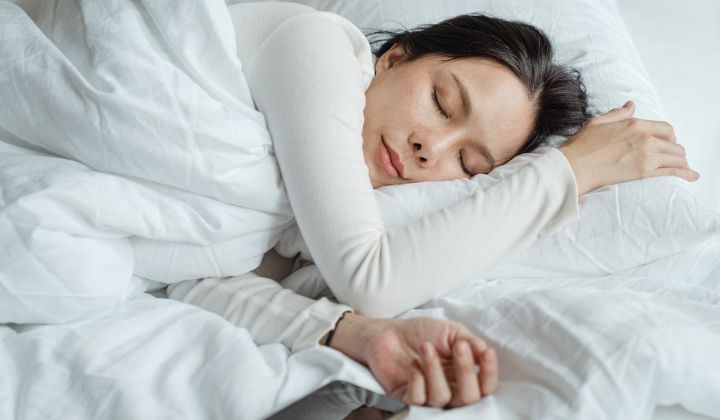
Pillows, mattresses, and bedding
There’s no single “best” mattress for everyone with back pain. What matters most is that it supports your body in a neutral position and feels comfortable to you. A mattress that is so soft you sink into a hammock, or so hard that your hips and shoulders can’t settle, is probably not helping.
A few practical tips:
- Use pillows strategically: under the knees on your back, between the knees on your side.
- Pick a head pillow that keeps your neck in line with your spine.
- If your mattress is sagging in the middle, a temporary fix is a firm board under it while you shop for a replacement.
Getting in and out of bed
Many people with low back pain feel the worst moment of the night is getting up. Try the “log roll”:
- Bend your knees and roll onto your side as one unit.
- Let your legs slide off the edge of the bed.
- Push up with your arms as your legs lower, so your trunk comes up without twisting.
Reverse the steps to lie down. This simple change spares you a lot of lower back strain.

When sleeping posture isn’t enough
Changing your sleeping posture for lower back pain is helpful, but it’s one piece of the puzzle. Most acute low back pain gets better on its own within a few weeks, and that matches what we see in our clinic. If your pain lasts more than a few weeks, keeps coming back, or wakes you up at night regardless of position, it’s time to have it evaluated.
Seek medical care right away if back pain comes with numbness in the groin or inner thighs, loss of bladder or bowel control, unexplained weight loss, fever, or weakness in your legs.
At Petersen Physical Therapy, we look at the whole picture: how you sleep, sit, stand, lift, and move during the day, and our guide to spinal stabilization exercises is a good place to start. Sometimes the problem isn’t the bed at all, but how you spend the other 16 hours. That’s why we also point people to our guide on choosing the right ergonomic work chair when their work setup may be contributing.
How long until a new position helps?
Changing how you sleep takes a little patience. Most people drift back to their usual position during the night, and that’s normal. Give a new setup about two to three weeks before deciding whether it’s working.
If your back pain is new, it often settles on its own with gentle movement. Our article on how long does back pain last lays out a realistic timeline. If your pain started with a sudden twinge, read our guide to what causes a tweaked back.
The bottom line
A good night’s sleep is one of the best things you can do for a sore back. Try sleeping on your back with a pillow under your knees, or on your side with a pillow between them, and limit stomach sleeping. Give each change a week or two, since your body may need time to adjust.