Over the years, many of our patients with Ehlers-Danlos syndrome have told us they were handed a generic exercise sheet that made their joints feel worse. The right Ehlers-Danlos syndrome physical therapy exercises look different, and most are simple to do at home.
Ehlers-Danlos syndrome physical therapy exercises are low-load stability and control movements done in the middle of each joint’s range. They build controlled muscle strength, joint stability, and body awareness, and progress slowly to reduce joint pain and the risk of subluxations.
We’ll cover how EDS exercise is different, exercises for every region of the body, what to avoid, and a sample week.
How to know if an exercise is good for EDS
Stay in mid-range, the middle part of a joint’s motion where it is best supported. Think light resistance, slow tempo, and a few quality reps.
EDS affects connective tissue throughout the body, so a good program covers every region. Progress comes from adding reps, then hold time, then light resistance, over weeks rather than days.
These exercises are one part of physical therapy for Ehlers-Danlos syndrome, plus education, pacing, and hands-on care.
How EDS exercise is different
If you are still learning what Ehlers-Danlos syndrome is, the short version is that the connective tissue holding your joints together is looser than usual. Your muscles have to do more of the work of keeping joints steady.
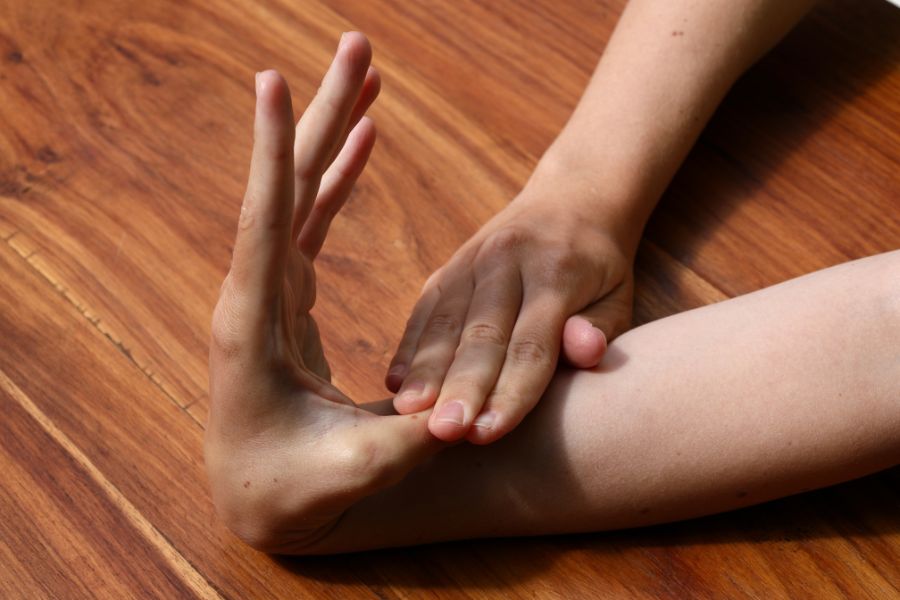
- Stay out of end range. Stop before the end of a joint’s range of motion, where joint instability is highest.
- Choose control over stretch. Hypermobile joints rarely need more flexibility.
- Keep reps low and quality high to build muscle. Stop when your form slips.
- Back off during chronic pain flares. On a bad day, cut the reps or range in half instead of quitting.
This comes down to the difference between strength and stability. A strong muscle helps most when it can hold a joint steady at the right moment.
EDS physical therapy exercises for every part of the body
Though there are essentially an infinite number of hypermobility exercises to choose from, these are some of our favorites for EDS specifically. We recommend you start with one or two exercises per region, 1 to 2 sets of 5 to 8 slow reps, and keep a soft bend in your joints.
Core and trunk
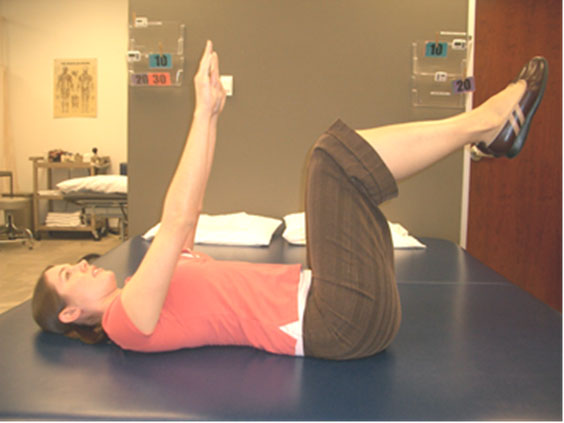
- Dead bug: Lie on your back, hips and knees bent to 90 degrees, arms pointing up. Slowly lower one arm and the opposite leg a few inches, then return. Feel: deep belly muscles working while your back stays still. Mistake: lowering too far, which lets your back arch.
- Bird dog: On hands and knees, reach one arm and the opposite leg out level with your trunk, hold two seconds, and return. Feel: the back of your hip and shoulder. Mistake: locking the supporting elbow or letting your low back sag.
- Glute bridge: Lie on your back, knees bent and feet flat, and lift your hips to form a line from knees to shoulders. Feel: your buttocks, not your low back. Mistake: pushing the hips too high and arching.
- Side-lying clamshell: Lie on your side with knees bent and heels together, then lift the top knee a few inches. Feel: the outside of your hip. Mistake: rolling the pelvis backward to get more height.
Many of these overlap with the spinal stabilization exercises we use for back pain, just kept to a smaller range than strength training.
Shoulders
- Wall slides short of end range: Facing a wall with forearms on it, slide your arms up past shoulder height, stopping short of overhead. Feel: the muscles around your shoulder blades. Mistake: shrugging or sliding all the way up.
- Isometric shoulder presses: In a doorway, gently press your wrist into the frame for 5 to 10 seconds, then repeat in other directions. Feel: your shoulder muscles switching on with no joint movement. Mistake: pressing so hard your shoulder hikes up.
- Band rows: Anchor a light band at chest height and pull your elbows back to your sides. Feel: the muscles between and below your shoulder blades. Mistake: pulling your elbows past your body, which pushes the shoulder forward.

Hips and knees
- Mini squats: With feet hip-width apart, bend your knees a quarter of the way down, then stand without snapping them straight. Feel: your thighs and buttocks. Mistake: knees caving inward or locking out at the top.
- Step-ups: Step onto a 4 to 6 inch step, stand tall, then step down slowly. Feel: the thigh and hip of the working leg. Mistake: pushing off the back foot or letting the knee drift inward.
- Band side steps: With a light band above your knees, take small steps to the side. Feel: the outside of your hips. Mistake: taking big steps that make your trunk sway.
- Short-range lunges: In a staggered stance, holding a counter, lower a few inches and rise. Feel: both legs sharing the work. Mistake: dropping too deep or letting the front knee wobble.
The same mid-range habits carry over to how you protect your hip joint on stairs, in chairs, and getting in and out of the car.
Ankles and balance
- Double-leg, then single-leg balance: Stand near a counter, feet together, for 20 to 30 seconds. Once steady, progress to one leg. Feel: small adjustments in your feet and ankles. Mistake: locking your knee to stay upright.
- Controlled heel raises: Holding a counter, rise onto the balls of your feet, then lower slowly. Feel: your calves. Mistake: rolling out toward the little toes or bouncing at the bottom.
If a joint has dislocated before, this kind of balance work is a big part of how physical therapy helps with dislocated joints.
Hands and wrists
- Putty grip: Squeeze soft therapy putty for 3 to 5 seconds, then relax. Feel: the muscles in your palm and forearm. Mistake: letting your fingertip joints bend backward.
- Band finger spreads: Loop a small band around your fingers and slowly spread them apart. Feel: the small muscles between your fingers. Mistake: spreading so far that your knuckles hyperextend.
- Wrist isometrics: With your forearm on a table, gently press your hand up, down, and sideways against your other hand for 5 to 10 seconds. Feel: your forearm muscles working with no wrist motion. Mistake: letting the wrist bend back while you press.
Pair these with joint protection techniques for the wrist, like using both hands to lift.
Neck
- Chin nods: Lying on your back, make a small “yes” nod and hold for 5 to 10 seconds. Feel: the deep muscles at the front of your neck. Mistake: lifting your head or clenching your jaw.
- Isometric holds: Sitting tall, gently press your palm into your forehead, then the back and sides of your head, without moving. Feel: your neck muscles working evenly. Mistake: pushing too hard. A quarter of your effort is enough.
Exercises to avoid or modify with EDS
Some popular exercises push hypermobile joints into unstable end range. We avoid or modify:
- Deep stretching. Long holds at end range feel good but add little stability. Swap them for gentle mid-range movement.
- End-range yoga poses. Deep backbends, splits, and full lotus strain loose joints. Stopping halfway into each pose works.
- Locking out joints. Hanging on straight elbows or knees shifts the load onto ligaments. Keep a micro-bend.
- High-impact plyometrics. Box jumps, burpees, and jump lunges load joints faster than your nervous system reacts. Save them for the long term, if at all.
Flexibility isn’t strength, and how flexibility affects strength is why deep stretching rarely helps with EDS.
A sample week of EDS exercises
Treat this as an example, not a prescription. Sessions of 10 to 15 minutes, four days a week, are a good starting point.
- Monday: dead bug, glute bridge, band rows, chin nods
- Tuesday: rest or an easy walk
- Wednesday: bird dog, mini squats, wall slides, double-leg balance, putty grip
- Thursday: rest
- Friday: side-lying clamshell, step-ups, isometric shoulder presses, heel raises, wrist isometrics
- Saturday: rest or an easy walk
- Sunday: band side steps, short-range lunges, single-leg balance, band finger spreads, neck isometric holds
Add reps before you add range or resistance. If symptoms flare more than a day, drop back to the last manageable level.
Physical therapy rest days support quality of life, especially when fatigue comes with EDS.
When to see a physical therapist
See a physical therapist if pain lasts into the next day, if joints keep subluxing, or you aren’t sure where to start. One who understands hypermobility can adjust them around your joints and past injuries.
Check with your doctor before starting a new program if you have heart, blood vessel, or autonomic symptoms with physical activity, like dizziness when standing.
Final thoughts
Ehlers-Danlos syndrome (EDS) affects the whole body, so the best exercise programs train every region with small, controlled movements in mid-range. Start low, progress slowly, and scale back on flare days instead of stopping. Done consistently, this work can help your joints feel steadier and your days less painful.